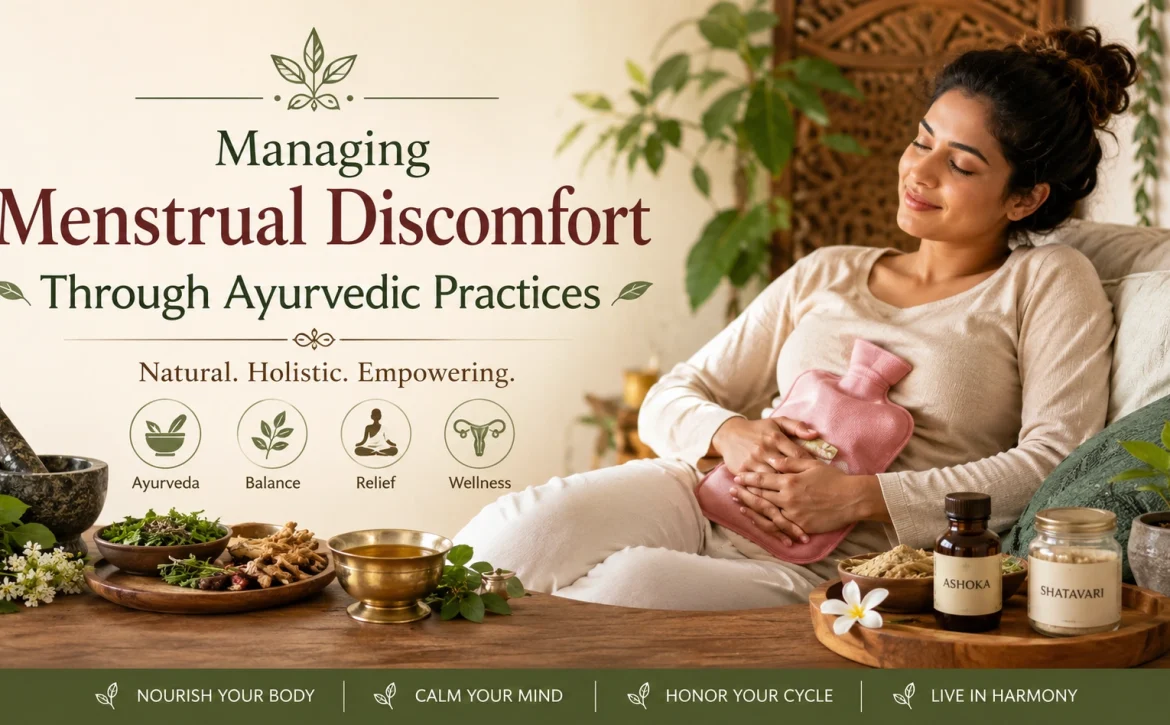
Managing Menstrual Discomfort Through Ayurvedic Practices
Menstrual discomfort is common, but common does not mean it should simply be endured. Many women experience painful periods, bloating, mood swings, irregular cycles, or heavy bleeding month after month without understanding why these symptoms occur. While temporary pain relief can help manage discomfort, it often does not address the underlying hormonal, digestive, or lifestyle factors involved. Ayurveda takes a different approach by viewing menstrual health as a reflection of overall balance within the body. At Vishwaneel, we combine modern diagnostics with Ayurvedic principles to understand the root cause of menstrual problems and provide personalised care. This article explores how Ayurveda approaches menstrual health and the role of integrated management in improving women’s wellbeing.
Understanding Menstrual Discomfort: What It Actually Means
Menstrual discomfort can present in different forms. Some women experience painful cramps known as dysmenorrhea, while others deal with PMS symptoms such as bloating, mood changes, breast tenderness, and fatigue. Irregular periods, heavy bleeding, scanty flow, or missed cycles are also common concerns.
These symptoms are often signs of deeper imbalances rather than isolated problems. Modern medicine evaluates hormonal factors, structural abnormalities, thyroid disorders, and conditions such as PCOS and endometriosis. Ayurveda views menstrual health through the balance of doshas, digestive strength, and tissue nourishment.
Understanding the causes of menstrual pain and the different types of period discomfort is essential for long term management.
The Ayurvedic View of Menstruation
In Ayurveda, menstrual blood or Artava is considered a byproduct of Rasa Dhatu, the body’s nutritive tissue. Healthy menstruation depends on proper nourishment and balanced physiology.
Apana Vata, the downward moving energy responsible for elimination and reproductive functions, plays a vital role in the menstrual cycle. When Apana Vata becomes disturbed, painful periods, irregular cycles, and other menstrual problems may occur.
Pitta imbalance may lead to excessive bleeding and inflammation, while Kapha imbalance is often associated with delayed periods and hormonal disturbances. Ayurveda also recognises the strong relationship between digestion and reproductive health. Poor digestion and the accumulation of Ama can affect hormonal balance and menstrual regularity.
Common Menstrual Conditions Ayurveda Addresses
Dysmenorrhea (Kashtartava)
Painful cramps are often linked to Vata imbalance. Management focuses on improving circulation, reducing pain, and restoring balance.
Irregular Or Absent Periods
Scanty flow or missed cycles are commonly associated with Vata disturbances and hormonal imbalance.
Heavy Menstrual Bleeding
Excessive bleeding is frequently connected with Pitta and Rakta Dhatu imbalance. Treatment aims to support uterine health and regulate flow.
Premenstrual Syndrome
Mood changes, bloating, breast tenderness, fatigue, and irritability usually involve multiple doshas and require individualised management.
PCOS
PCOS is often viewed as a Kapha Vata disorder associated with metabolic imbalance and hormonal dysfunction. Management focuses on improving metabolism, reducing Ama, and supporting hormonal balance.
Ayurvedic Herbs For Menstrual Health
Shatavari
One of the most valued herbs for women, Shatavari supports reproductive health and hormonal balance.
Ashoka
Traditionally used for uterine health and management of heavy menstrual bleeding.
Lodhra
Commonly used in women with PCOS, irregular periods, and excessive bleeding.
Dashamoola
Helps calm Vata and supports pain relief.
Triphala
Improves digestion and elimination, indirectly supporting hormonal and menstrual health.
These herbs should always be used under the supervision of a qualified Ayurvedic physician rather than through self medication.
Panchakarma And Therapeutic Procedures For Menstrual Disorders
Basti
Considered one of the most important therapies for regulating Apana Vata and supporting reproductive health.
Uttara Basti
A specialised Panchakarma procedure traditionally used in selected gynaecological conditions.
Virechana
Useful for Pitta dominant conditions involving inflammation and excessive bleeding.
Abhyanga
Therapeutic oil massage helps reduce stress, improve circulation, and pacify Vata.
Panchakarma for women’s health is always personalised according to constitution and medical requirements.
Diet And Lifestyle Practices To Support Menstrual Health
Warm, freshly prepared, easily digestible foods are generally preferred during menstruation. Cold, processed, excessively spicy, and raw foods may aggravate digestive imbalance and worsen symptoms.
Gentle yoga practices such as Supta Baddha Konasana, Balasana, and Viparita Karani support pelvic circulation and relaxation.
Stress management is equally important because elevated cortisol levels can disrupt the hormonal axis and contribute to irregular cycles and PMS symptoms. Daily routines, adequate sleep, and mindful eating play an important role in maintaining reproductive health.
When To Seek Professional Evaluation
Menstrual discomfort should not always be managed at home. Medical evaluation becomes important if you experience:
- Severe or worsening pain
• Heavy bleeding affecting daily life
• Missed periods
• Irregular cycles
• Symptoms suggestive of PCOS, thyroid disorders, fibroids, or endometriosis
Delaying assessment may postpone diagnosis and appropriate treatment. Integrated women’s healthcare helps identify the root cause while supporting long term wellbeing.
The Vishwaneel Approach To Women’s Hormonal Health
At Vishwaneel, we combine modern hormonal investigations with Ayurvedic assessment. Depending on individual requirements, investigations may include:
- FSH and LH levels
• Oestrogen and progesterone levels
• AMH testing
• Thyroid profile
• Ultrasound and other investigations when required
Alongside these, Ayurvedic assessment evaluates constitution, digestive health, lifestyle patterns, and menstrual history. Treatment plans are personalised according to each woman’s needs and may include Ayurvedic medicines, dietary guidance, Panchakarma therapies, and lifestyle modifications.
Our goal is to provide long term hormonal balance rather than temporary symptom suppression.
Conclusion
Menstrual discomfort has solutions beyond monthly painkillers and temporary relief. Ayurveda views menstrual health as a reflection of overall balance involving hormones, digestion, stress, and lifestyle. When combined with modern diagnostics, this approach offers a comprehensive understanding of women’s health.
At Vishwaneel, we believe every woman deserves to understand the reason behind her symptoms and receive care that addresses the root cause. Book a consultation today to begin your menstrual health assessment and receive a personalised treatment plan.
Frequently Asked Questions
Can Ayurveda help with painful periods naturally?
Ayurveda focuses on balancing doshas, improving digestion, and supporting hormonal health. Personalised treatment plans may help manage menstrual discomfort naturally.
Which Ayurvedic herb is best for menstrual pain?
Shatavari, Ashoka, Dashamoola, and Lodhra are commonly used in women’s health, but they should only be taken under medical supervision.
Can Ayurveda help with irregular periods and PCOS?
Yes. Ayurvedic management aims to improve metabolism, hormonal balance, and overall reproductive health. Integrated assessment is important for proper diagnosis and treatment.
Which Panchakarma treatment is useful for menstrual disorders?
Basti, Virechana, and Abhyanga are commonly used therapies depending on the individual’s constitution and symptoms.
What foods should be avoided during periods?
Highly processed, cold, raw, and excessively spicy foods may aggravate symptoms in some women. Warm and easily digestible meals are generally preferred.
When should I consult a doctor for menstrual problems?
You should seek medical evaluation if you experience severe pain, heavy bleeding, irregular cycles, absent periods, or symptoms suggestive of PCOS, thyroid disorders, fibroids, or endometriosis.
Can stress affect menstrual cycles?
Yes. Chronic stress influences cortisol levels and may disrupt hormonal balance, contributing to irregular periods, PMS symptoms, and worsening menstrual discomfort.